
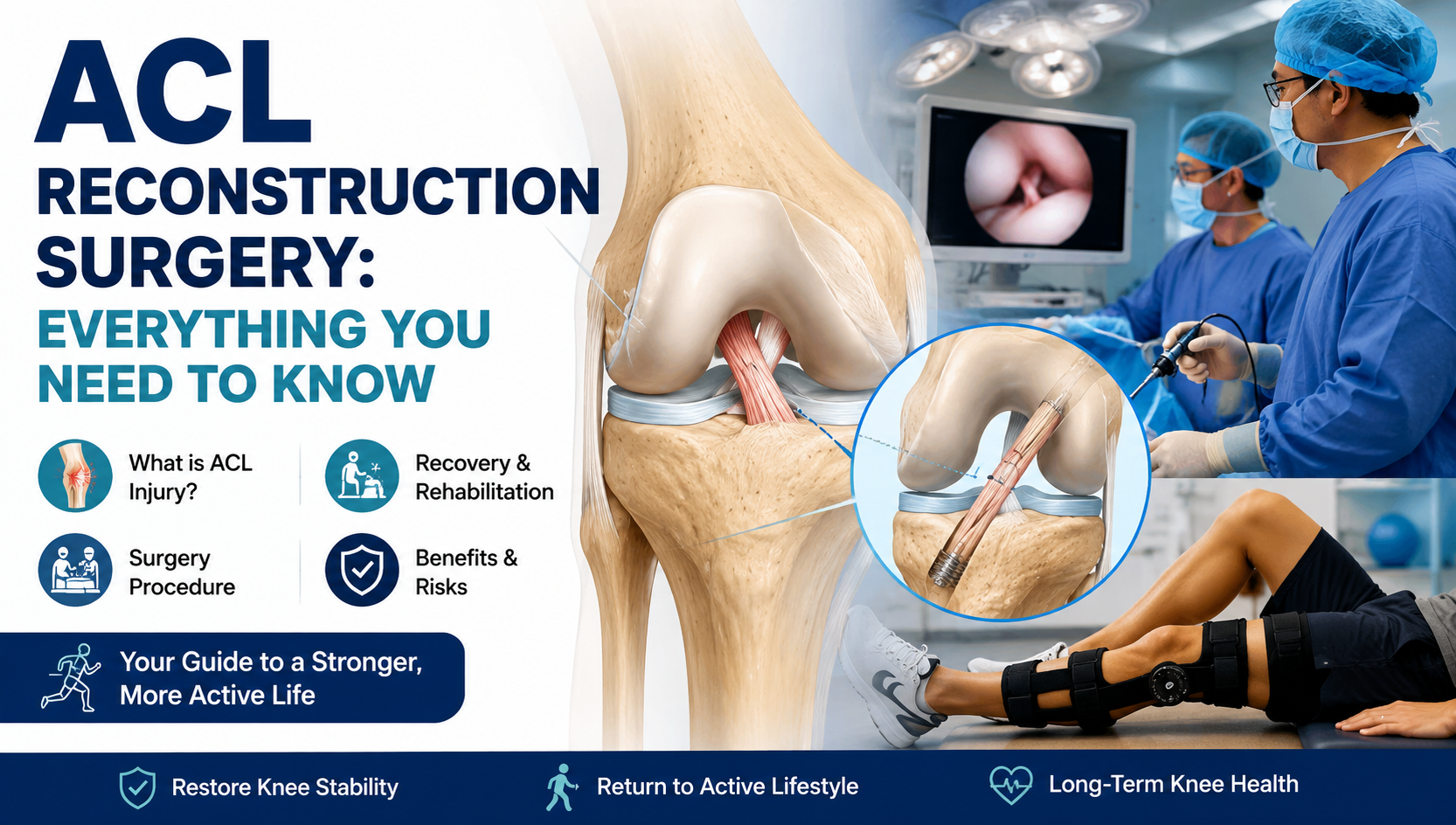
An Anterior Cruciate Ligament (ACL) injury is one of the most common knee injuries, especially among athletes and active individuals. When the ACL is severely torn, ACL reconstruction surgery is often recommended to restore knee stability and function. Understanding the procedure, recovery process, and benefits can help patients make informed decisions about their treatment.
What Is ACL Reconstruction Surgery?
ACL reconstruction surgery is a procedure that replaces a torn ACL with a tissue graft. The ACL is a major ligament that helps stabilize the knee joint during movement. A torn ACL can cause pain, swelling, instability, and difficulty participating in sports or daily activities.
During surgery, the damaged ligament is removed and replaced with a graft taken from the patient’s own tendon (autograft) or from a donor (allograft). The procedure is typically performed using minimally invasive arthroscopic techniques, resulting in smaller incisions and faster recovery.
When Is ACL Surgery Needed?
Not every ACL tear requires surgery. However, ACL reconstruction may be recommended if:
- The knee frequently gives way during activities.
- The patient participates in sports involving jumping, pivoting, or sudden direction changes.
- There are additional injuries to the meniscus or other ligaments.
- Non-surgical treatment has not restored knee stability.
An orthopedic specialist will evaluate the severity of the injury and recommend the most appropriate treatment plan.
Recovery and Rehabilitation
Recovery from ACL reconstruction surgery is a gradual process that typically takes 6 to 12 months. Physical therapy plays a crucial role in regaining strength, flexibility, and balance.
The rehabilitation process generally includes:
- Reducing pain and swelling
- Restoring knee range of motion
- Strengthening the leg muscles
- Improving balance and coordination
- Returning safely to sports and physical activities
Following the rehabilitation program carefully can significantly improve long-term outcomes.
Benefits and Risks
The primary benefits of ACL reconstruction surgery include improved knee stability, reduced risk of further joint damage, and a higher likelihood of returning to sports and active lifestyles. Arthroscopy Surgery Hyderabad
As with any surgical procedure, risks may include infection, blood clots, stiffness, graft failure, or persistent pain. Choosing an experienced orthopedic surgeon and adhering to rehabilitation guidelines can help minimize complications.
Conclusion
ACL reconstruction surgery is a highly effective treatment for individuals with significant ACL injuries. With proper surgical care and dedicated rehabilitation, most patients can regain knee function and return to their normal activities. Consulting an orthopedic specialist is the first step toward determining the best treatment option for your specific condition.